




Manta Rays: The Gentle Giants of the Ocean
There are encounters in the ocean that change you forever. One of them is an encounter with a manta ray. With a wingspan of up to seven meters, these majestic animals glide through the blue like living silhouettes – silent, elegant, and absolutely breathtaking. Manta rays are among the most fascinating marine creatures on our planet, but they are increasingly threatened by human influences. It's high time to learn more about them.
🦈 Short Facts – Manta Rays
- Scientific Name: Mobula birostris (Giant Manta) / Mobula alfredi (Reef Manta)
- Size: Wingspan up to 7 meters (Giant Manta)
- Weight: Up to 2,000 kg
- Lifespan: Estimated 40+ years
- Diet: Plankton, small fish, and crustaceans (Filter feeders)
- Habitat: Tropical and subtropical oceans worldwide
- Conservation Status: Vulnerable (IUCN Red List)
- Main Threats: Plastic pollution, bycatch, targeted fishing

How the Manta Ray Lives 🌊
Manta rays are not predators in the classical sense – they feed exclusively on tiny plankton, which they filter from the water with their wide mouth slits. They swim through plankton clouds with their mouths wide open, allowing the water to flow through special gill rakers. This filtering method makes them true specialists and shows that size does not require violence.
Their social behavior is remarkable. Manta rays are often found in groups, sometimes even in so-called "feeding frenzies" where dozens of animals swim synchronously in circles to exploit a plankton cloud together. Scientists have also observed that female mantas give birth to only one pup every two to five years – which makes them particularly vulnerable to population decline.
Why Manta Rays Are Threatened 🚨
Unfortunately, manta rays are under pressure worldwide. According to the IUCN Red List, the giant manta ray is considered "vulnerable." The biggest threats are:
- Plastic Pollution: Manta rays are filter feeders – they inevitably ingest microplastics and plastic fragments when feeding. Studies show that they can consume up to 63 mg of microplastic particles daily.
- Bycatch: Many manta rays end up in fishing nets that are actually set for other species. They get entangled and drown.
- Targeted Fishing: In some regions of Southeast Asia, manta rays are caught for their gill plates, which are used in traditional Chinese medicine – although their medicinal value has not been scientifically proven.
- Climate Change: Rising ocean temperatures alter plankton distribution and thus the food source of manta rays.

What Makes Manta Rays So Special 🧠
Manta rays are considered one of the most intelligent fish species. Their brain-to-body ratio is unusually large. They can recognize conspecifics, exhibit social behavior, and some researchers even suspect that they are self-aware – similar to dolphins or elephants. In aquariums, manta rays have learned to react to their own mirror image, which suggests a form of self-perception.
Another phenomenon: "Breaching" – the dramatic leaping out of the water. Whether for communication, parasite defense, or simply out of joy – scientists are still puzzling over the exact reason. What is certain is that it is an unforgettable spectacle that captivates divers and snorkelers worldwide.
Protecting Manta Rays – What You Can Do 💪
The good news: Each of us can actively contribute to the protection of manta rays. Reducing plastic in everyday life is one of the most effective levers. Because less plastic in the ocean means less microplastic in the bodies of these fascinating animals.
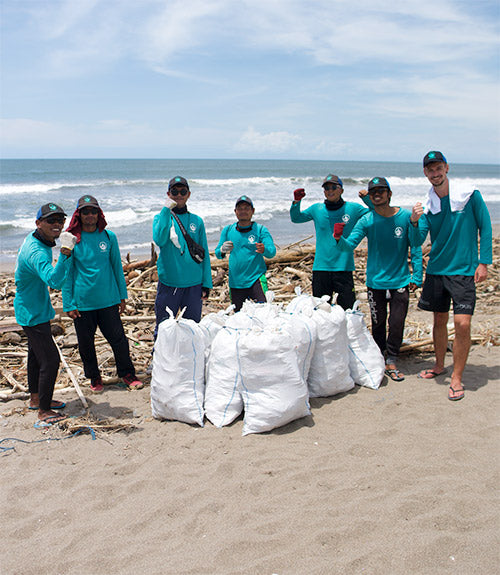
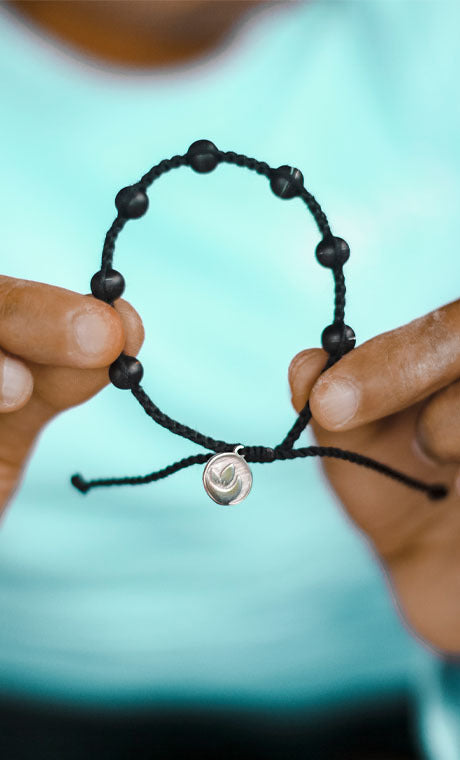
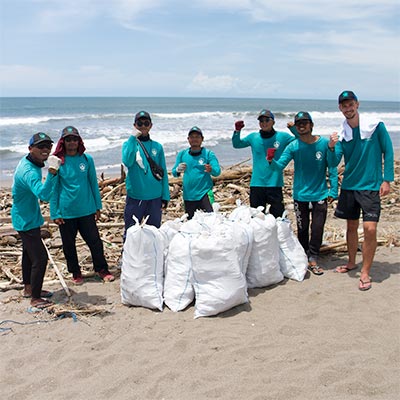
At Oceanmata, we have a clear promise: For every product you buy, we collect 1 kg of plastic from the ocean – directly in Medewi, Bali. This way, your purchase of a sustainable phone case made from Ocean Plastic or an ocean plastic bracelet becomes a real contribution to cleaner oceans.
A marine animal sponsorship is also a wonderful way to directly contribute to the protection of manta rays and other endangered marine animals. You support conservation projects that advocate for a plastic-free ocean.
When Dominik quit his job as an engineer at Airbus in 2020 to found Oceanmata, he knew: The fight against ocean plastic begins with small steps. What started as an idea on a littered beach in Bali is now a team of 11 employees in Medewi who collect plastic every day.
🌊 Together for a plastic-free ocean
Manta rays need us – and every decision counts. Choose sustainable products from Oceanmata, reduce your plastic consumption, and tell your friends about these fascinating animals. Every step brings us closer to a cleaner ocean – and a bit more security for the manta ray.
Entdecke passende Oceanmata Produkte