





Your boss is annoying you, your inbox is overflowing, your head is spinning – and then you go into the forest. 🌿 Just like that. Without a plan, without a goal, without time pressure. And after two hours, you feel like a different person.
This is no coincidence. Science confirms what you intuitively already know: nature heals. Hiking is one of the most effective, side-effect-free, and cheapest anti-stress methods available. No subscription, no therapist waiting list, no app needed. Just you, a pair of shoes, and a path.
https://shopify-staged-uploads.storage.googleapis.com/tmp/245956671/files/a3cf6eed-413a-4e83-a5ff-68bf9118db1d/a4_0.jpgImage credit: @petepontone
What does science say?
Research into nature and mental health has exploded in recent years – and the results are impressive:
- Cortisol Reduction: A Japanese study on Shinrin-Yoku (forest bathing) showed that just 2 hours in the forest can reduce cortisol levels by up to 16%. Cortisol is the stress hormone that sabotages your immune system, sleep, and mood during chronic stress.
- Less Rumination: A much-discussed Stanford study found that a 90-minute walk in nature significantly reduces activity in the prefrontal cortex – precisely the area responsible for repetitive rumination. City walks did not have this effect.
- Blood Pressure and Heart Rate: Regular time spent in nature demonstrably lowers blood pressure and stabilizes heart rate. Your body literally switches from fight-or-flight mode to recovery mode.
Why hiking works better than the gym
Nothing against your gym – exercise is always good. But hiking combines three things that together have a turbo effect on your psyche:
- Nature: Trees, water, birdsong – your nervous system reacts completely differently to natural stimuli than to neon lights and techno beats. Nature activates your parasympathetic nervous system (the "rest mode").
- Steady Movement: Hiking is not HIIT training. The moderate pace over a longer period releases endorphins without overwhelming you. Your body enters a flow state.
- No Distraction: No screen, no notifications, no decisions. Your brain finally gets a break from the input overload of everyday life. This is true neurological recovery.
Image credit: @mai.roper
5 tips for your perfect stress-relief hike
To ensure hiking truly combats stress, these five principles help:
- Go alone. Sounds uncomfortable at first, but it's golden. No conversations, no compromises on pace, no social pressure. Just you and your thoughts – which will quiet down after a while. If the topic of solo hiking encourages you, also read our article on freediving – another way to find peace alone in nature.
- Phone on airplane mode. Yes, really. Constant availability is one of the biggest stressors of our time. For 2-3 hours, the world can go on without you.
- Go slower than you think. It's not about kilometers or altitude gain. Go so slowly that you notice the details: the moss on the tree trunk, the smell of damp earth, the light filtering through the leaves.
- Breathe consciously. Every 15-20 minutes: stop, close your eyes, take 5 deep breaths. Inhale through the nose, exhale through the mouth. Sounds simple – but it has a direct effect on your nervous system.
- Have no goal. No summit, no "I have to get there." Turn back when you want. Take the turn-off that interests you. The most beautiful experiences happen without an agenda.
Especially important: Nature breaks for helping professions
If you work as a nurse, doctor, police officer, teacher, or social worker, you know this: You give energy to others all day long – and at the end, there's nothing left for you. Especially in helping professions, the burnout rate is alarmingly high.
Nature breaks are particularly valuable here because they offer something that is completely missing in professional life: no responsibility for others. In the forest, you don't have to help anyone, decide anything, or save anything. You can just be. That sounds trivial, but it can be transformative.
Tip: Block out a fixed day per week or every two weeks as a "nature day." Non-negotiable. Non-postponable. You deserve it just as much as your patients, students, or colleagues.
And if you generally want to live more sustainably and consciously – even in everyday life – you'll find plenty of inspiration in our article 40 tips for a plastic-free life.
We at Oceanmata firmly believe that humans and nature are inextricably linked. Our founder Dominik Karl gave up his job as an Airbus engineer precisely for this reason: to actively protect nature. Today, our team in Bali has removed over 300,000 kg of ocean plastic from the sea – supported by more than 165,000 ocean heroes.
🌊 Your phone can stay on airplane mode – but it still needs a good case
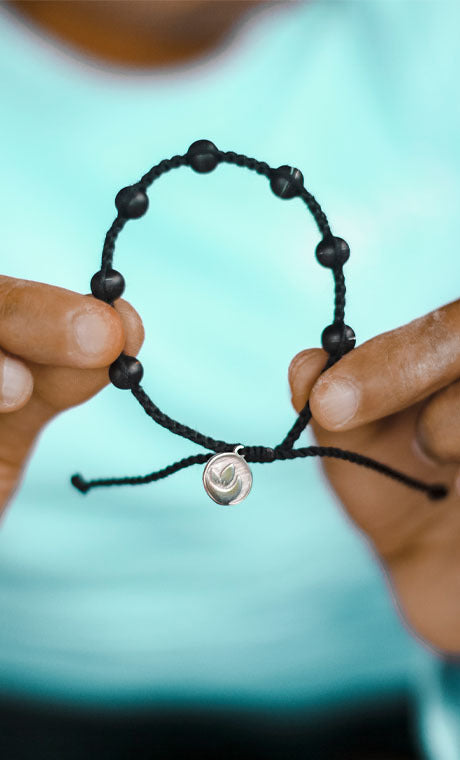
Protect your smartphone with a compostable phone case from Oceanmata. For every case, 1 kg of plastic is removed from the ocean. Or discover our bracelets made from recycled ocean plastic – the perfect accessory for your next hike.