

Imagine silently gliding through clear water
No regulator, no bubbles – just you, your breath, and the ocean around you. Freediving is more than just diving without a tank. It's an invitation to experience the ocean as fish and sea turtles do: in silence.
And it's precisely this silence that changes everything.

Image credit: Photo by @afuafex
What exactly is Freediving?
Freediving – also known as apnea diving – means diving underwater with just one breath. Without a compressed air tank, without heavy equipment. Usually, a mask, long fins, and a wetsuit are sufficient. Some freedivers even go without fins.
Sounds easy? It is – at least at the beginning. You don't have to be particularly athletic or have years of experience. Many freediving schools in Bali offer courses for absolute beginners that will get you to a depth of 10 to 20 meters in just a few days.
The crucial thing isn't the depth. It's the feeling.
Why Freediving Changes Your View of the Ocean
When you snorkel, staying on the surface, you see the ocean from above. A beautiful view – but also a distant one. When freediving, you immerse yourself. You become part of the underwater world instead of a spectator.
You feel the pressure on your ears, hear your own heart beating, and suddenly realize: the ocean isn't just a background photo. It's a living system – and it breathes just like you.
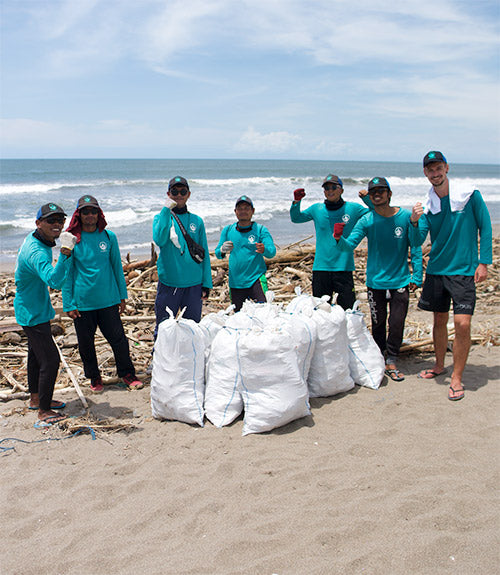
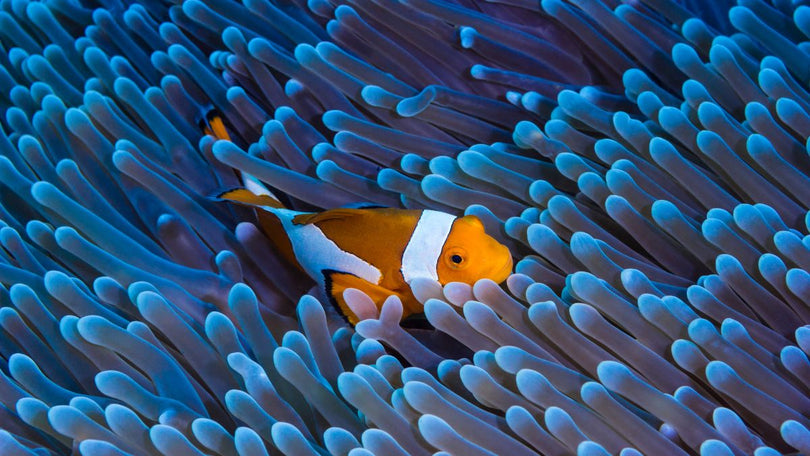
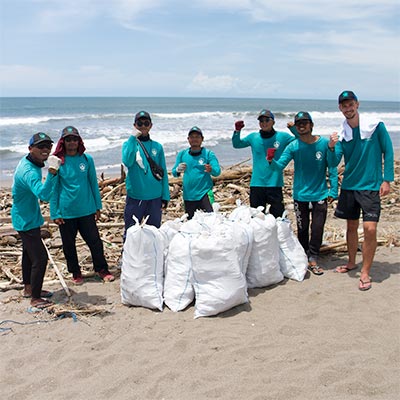
In Medewi, where our cleanup team collects up to 300 kilograms of plastic from the beaches daily, the reefs directly off the coast offer a completely different view. From above, you see waves. From below, you see corals, rays, sometimes a sea turtle. And sometimes, unfortunately, plastic that doesn't belong there.
What Others Say: I Thought Surfing Connected Me to the Ocean – Until I Went Freediving
Sarah, 29, from Munich, learned freediving for the first time in Bali last year: "I've been surfing for years and thought I knew the ocean. Then, during a freediving course in Amed, I dove down for the first time and saw a turtle at 12 meters. I just had to cry. It was so intense – you never feel something like that on the surface. Today, Sarah is involved in marine conservation and has reduced all her plastic packaging at home."
Freediving and Ocean Conservation: Why They Belong Together
This is where it gets interesting. Studies show that those who experience the ocean personally – not just watching documentaries, but firsthand – develop a stronger environmental awareness. When freediving, you are as close to the reef as almost anywhere else. You see coral bleaching, plastic waste between the rocks, the turtle struggling through an old fishing net.
You don't forget these images.
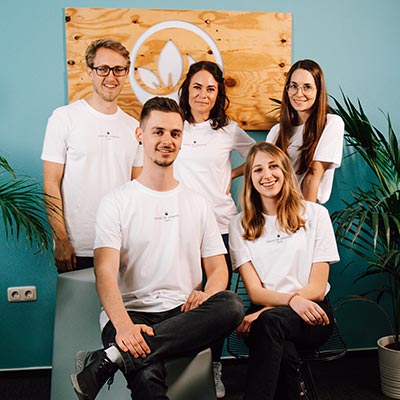
Our founder Dominik experienced something similar. Not while freediving, but while surfing in Indonesia. He saw how much plastic was on the beaches and thought: "This can't be all there is." Today, OceanMata has collected over 320,000 kilograms of ocean plastic – with a team of 11 people in Bali.
It all started with a single moment on the beach.

Image credit: Photo by @afuafex
Your First Freediving Course: What You Need to Know
Before you jump straight into the water – a few basics:
- Never dive alone. This is the most important rule in freediving. Always with a buddy.
- Learn to breathe. Before going into the water, you practice breathing techniques on land. Deep diaphragmatic breathing, relaxation exercises, the so-called "breathe up."
- Equalization. Your ears will be subjected to pressure. Techniques like the Valsalva maneuver help to compensate for this.
- Proper equipment. A good mask, long fins, and a wetsuit are enough to start. Many schools provide everything.
- Respect for the body. Blackouts are the biggest danger in freediving. Therefore: take a course, never push yourself, always stay relaxed.
The Best Freediving Spots – Also in Bali
Bali is not just a surfer's paradise. The island offers some of the best freediving spots in Southeast Asia:
- Tulamben: The USS Liberty Wreck lies directly off the coast at depths of only 5 to 30 meters. Perfect for beginners and advanced divers.
- Amed: Clear water, colorful corals, and a relaxed atmosphere.
- Nusa Penida: Here you can encounter Manta Rays – the gentle giants of the ocean, with wingspans of up to 7 meters.
- Padang Bai: Few tourists, good visibility, and abundant marine life.
Freediving Meets Sustainability
When you freedive in Bali, you directly benefit from what we create with OceanMata: cleaner beaches, healthier reefs, an intact underwater world. Every time you dive underwater and see a vibrant coral instead of a plastic mountain, it's no coincidence. It's the result of daily effort.
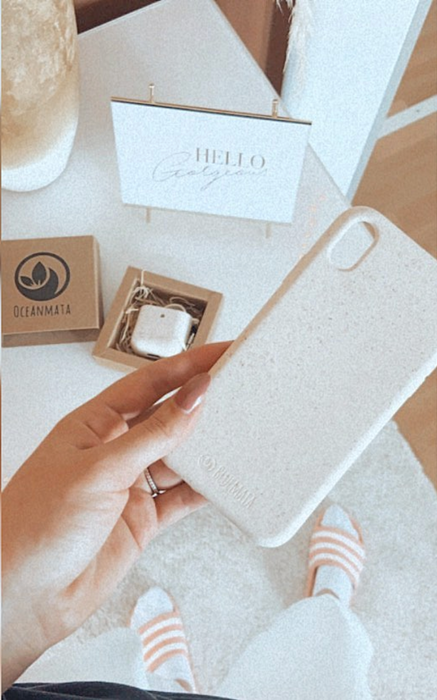
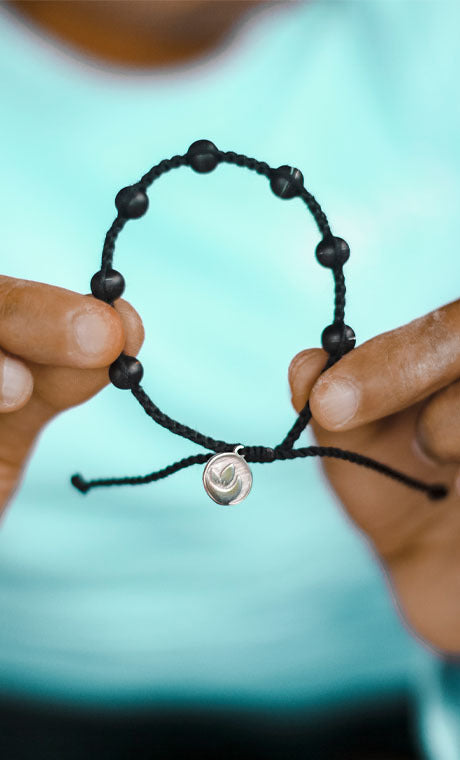
And you can be a part of it. Not just as a freediver, but also as a consumer. Our ocean jewelry collection is made from recycled ocean plastic – each piece tells a story of mountains of plastic waste removed from the ocean. Our compostable phone cases ensure that your phone case doesn't end up as microplastic in the ocean in 500 years. And with our Marine Friends collection, you choose designs that celebrate sea turtles, manta rays, and whales.
Each product = 1 kg of plastic collected from the sea. We've already managed over 320,000 kg.
Conclusion: Go Under – and Come Back Changed
Freediving connects you to the ocean in a way not possible on the surface. It's meditation, adventure, and nature experience all in one. And it makes you a better ocean protector – because you no longer just know that the ocean is important. You feel it.
Next time you're in Bali, try it. Book a course in Amed or Tulamben. And when you come back to the surface, remember: every breath you take underwater is one more reason to protect this ocean.
Join us! Discover our entire collection and help us make the oceans plastic-free by 2050. For every product, we collect 1 kg of plastic from the sea. oceanmata.com 🌊🐢💙
Further reading
- Microplastics in the ocean – why tiny plastic particles are our biggest problem
- What actually happens to the plastic we fish out of the sea?
For more information on freediving in Bali, visit AIDA International, the global governing body for apnea diving.
Entdecke passende Oceanmata Produkte