



Imagine swimming next to a fish as big as a school bus
No joke. A whale shark - up to 12 meters long and weighing 20 tons - is the largest fish ever to swim in the ocean. Bigger than any shark you're imagining. Bigger than most boats. Bigger than anything you picture as a "fish."
And the crazy part? It only filters plankton. This giant among sharks doesn't eat humans, seals, or even really big fish. It swims through the sea with its mouth open, scooping up tiny creatures. It's as fascinating as it is absurd.
But despite its size and gentle nature, the whale shark is on the Red List of Endangered Species. And here's the connection you wouldn't expect: plastic pollution, bycatch, and tourism - all threaten these gentle giants. Just as they threaten our oceans, for which we at Oceanmata in Medewi, Bali, go to the beach every day.
What exactly is a whale shark? (Spoiler: Not a whale, not a normal shark)
The whale shark (Rhincodon typus) is a true unique creature in the animal kingdom:
- Size: Up to 12 meters - about as long as a coach bus
- Weight: Up to 20 tons - equivalent to about 4 elephants
- Age: Estimated 70 to 100 years
- Diet: Plankton, small fish, and fish eggs (filter feeder, not a hunter!)
- Movement: Only about 5 km/h - slower than you walk
- Teeth: Over 300 tiny teeth - but it doesn't chew with them
It has nothing to do with whales, but it's also not a "normal" shark like the Great White or Tiger Shark. It belongs to the family of carpet sharks and is the only species of its genus. Simply: unique.
Why Indonesia is the best place to encounter them
If you ever want to encounter a whale shark in the water, then Indonesia is one of the top spots worldwide. Especially on the east coast of Raja Ampat (West Papua), in Derawan, or off Nusa Penida near Bali, encounters are relatively likely. Our team in Medewi, on the west coast of Bali, sees them less often - but when they do appear, it's always a spine-tingling moment.
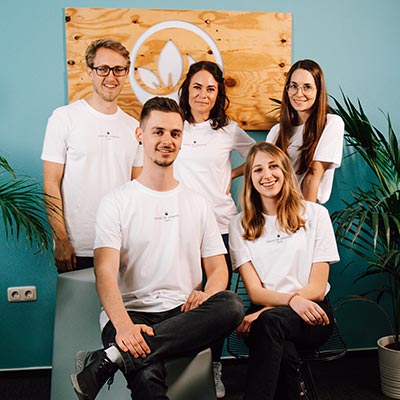
When Dominik arrived in Medewi in 2018, he was originally just there to surf. But what he saw - beaches full of plastic, fishing nets trapping marine animals - wouldn't leave him alone. A local showed him the piles of rubbish on the riverbank and said: "This is your ocean back home." From then on, he knew: I have to stay here.
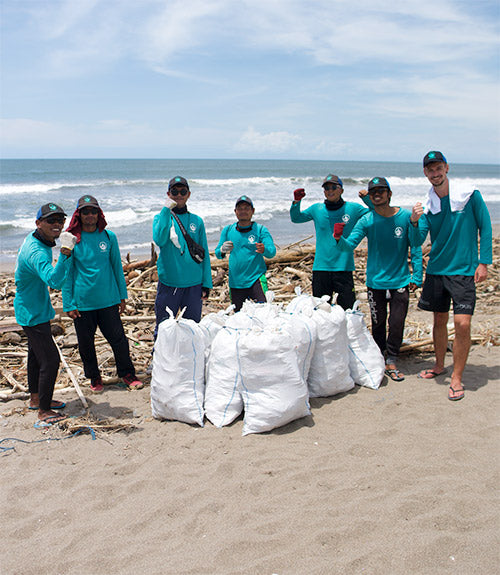
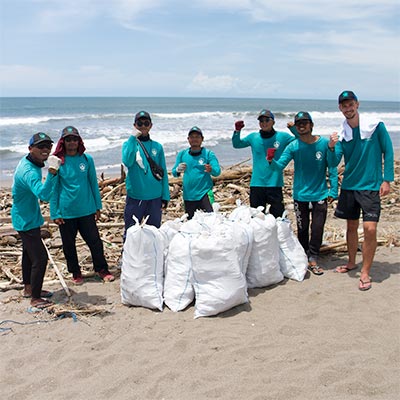
Today, with an 11-person team on site, we at Oceanmata collect plastic from the beach every day. For every product sold, we remove at least 1 kg of plastic directly from the ocean. And because whale sharks swim through these very seas, that is our fight.

Image credit: Photo by @mai.roper
The biggest threat to whale sharks is not what you think
Hollywood shows us: sharks are dangerous. The reality? Nearly 100 million sharks are killed by humans every year. Shark fin soup (a luxury dish in parts of Asia), bycatch in industrial fishing, and the illegal trade in fins are severely impacting these gentle giants. Their population has declined by more than 50% in the last half-century.
And then there's the plastic problem:
- Ghost nets - lost fishing nets drift in the oceans, trapping whale sharks who then suffocate or starve
- Macroplastic - the WWF estimates that about 8 million tons of plastic enter the sea every year - and whale sharks mistake plastic bags for jellyfish, their natural prey
- Microplastic - Tiny plastic particles end up in plankton - and thus directly in the whale sharks' food chain
The worst part: A whale shark filters thousands of liters of water per hour. If this water is full of plastic particles, it absorbs everything. Every single plastic bag on a beach in Bali could theoretically end up in its stomach.
What our team in Medewi is doing about the plastic problem
At Oceanmata, we don't just talk about the ocean. We go out every day and remove plastic before it reaches the whale sharks.
What we specifically do:
- Daily beach clean-ups - Our team collects trash every day on the beach in Medewi and the surrounding coasts
- River barriers - We install barriers in river mouths that trap plastic before it enters the open sea
- Educational lessons in schools - We teach Balinese children why the ocean is important - and that they are the future of this ecosystem
- Free rubbish bins - A simple measure that is more effective than any campaign: free bins for locals and tourists
- Recycling with Precious Plastic machines - We shred collected plastic and turn it into new products
Since our inception, we have removed over 300,000 kg of plastic from the ocean. Over 165,000 ocean heroes support us in this. And more is added every day.

Image credit: Photo by @mai.roper
Whale Shark Swimming - How to respectfully encounter them in the wild
If you travel to Indonesia and have the chance to swim next to a whale shark: there are a few rules you should definitely follow. Because yes - there are tour operators who get too close, conduct feedings, and stress the animals.
How to behave correctly:
- Maintain 3 meters distance - both to the side and behind the animal
- Do not touch - the mucous layer on the whale sharks' skin is their natural protection against infections
- No flash photography - Underwater flashes irritate the animals
- No feeding - Artificial feeding changes natural behavior
- Choose a respectful provider - Look for eco-certification and local guides
Our tip: If you are in Bali, ask our local team. They know the best, most responsible providers and can give you honest recommendations - no tourist traps.
What you can do for whale sharks from home
Not everyone can fly to Indonesia. But you can still make a difference - every day, from home:
- Reduce plastic waste. Every plastic bag you don't use is one less that ends up in the ocean. Our sustainable phone cases are a start - for every product sold, we collect 1 kg of plastic from the ocean.
- Say no to shark fin soup. The consumption of shark fins is a direct threat to all shark species, including whale sharks.
- Support marine conservation organizations. Whether with a marine animal sponsorship or a donation - every cent counts.
- Spread the word. The more people know how fascinating and worthy of protection whale sharks are, the greater the pressure on politicians and industry to make a change.
"A plastic-free world starts with the next decision"
"I buy from Oceanmata because I have the good feeling that my purchase truly makes a difference. Especially the transparency - you see what happens to the collected plastic. That's the difference from green marketing for me."
This is what one of our customers writes. And that's exactly what we're about: not the perfect product, but the better one. With transparency, honesty, and real impact.
Our 4.76 out of 5 stars from over 10,000 reviews show: it works. People want to buy products with a real story behind them. And the story of the Airbus engineer who changed his life because he saw the plastic crisis with his own eyes - that's not marketing fiction. That's our everyday life.
Learn more about our marine animal sponsorships
Conclusion: Whale sharks are not monsters - they are ambassadors
The whale shark is the perfect example of how wrong the image of the "evil shark" is in our minds. It is peaceful, slow, awe-inspiring, and absolutely vulnerable. It doesn't eat meat, doesn't threaten swimmers - and yet millions of its kind die every year by human hands.
Perhaps that is why it is such an important ambassador. Because it shows us: the ocean is threatened, not because the animals are dangerous, but because we are - with our plastic, our nets, our consumption.
The good news? Every small step counts. Every kilogram of plastic we remove from the ocean, every conversation about marine animals, every sustainable purchasing decision - all contribute to ensuring that whale sharks still swim through our seas in 100 years.
Help protect the ocean for whale sharks and all of us
Every Oceanmata product collects 1 kg of plastic from the ocean. In Medewi, Bali. By a team that is on the beach every day to keep the ocean clean. No greenwashing. No empty promises.
You might also be interested in
Whales and plastic - why the giants of the seas need our help
Manta Rays: The gentle giants of the ocean
IUCN Red List: Whale Shark (Rhincodon typus) - Endangered
Entdecke passende Oceanmata Produkte