


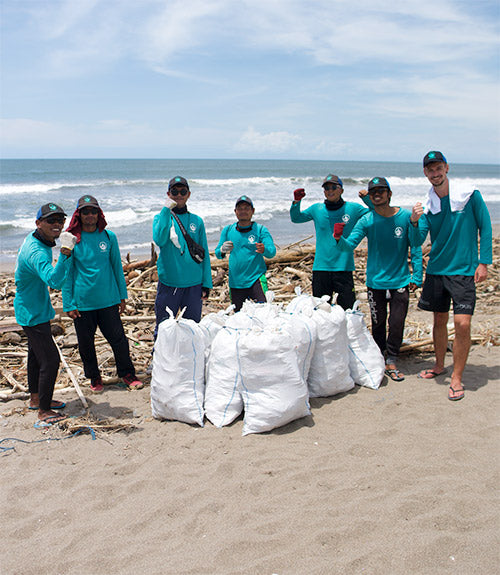

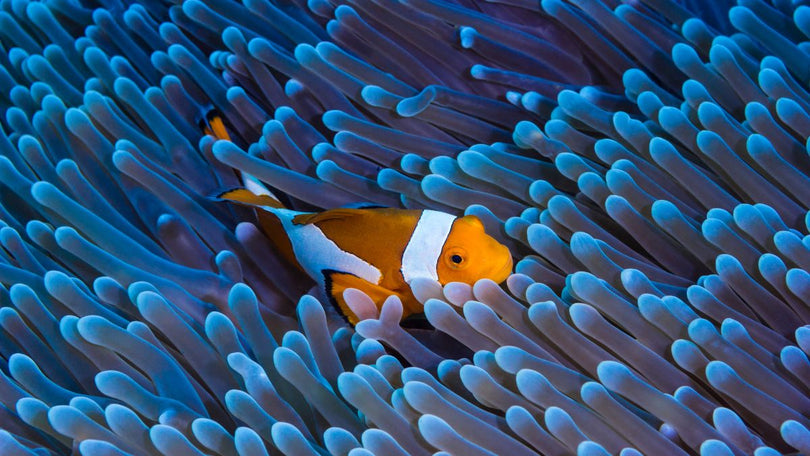




Imagine diving into the deep blue expanse of the ocean. A humpback whale glides past you – 15 meters long, majestic, almost weightless. Its song echoes through the water like an ancient melody. And then you see it: Plastic bags, bottle caps, and fishing nets drifting between the waves. This is the reality our 11-person team in Medewi, Bali, experiences every day – but on the beach instead of underwater. 🐋
Whales and Plastic – A Problem Bigger Than You Think

Image credit: Photo by @mai.roper
Whales are among the most fascinating creatures on our planet. Blue whales are the largest animals to have ever lived on Earth. Humpback whales travel up to 25,000 kilometers each year – one of the longest migrations in the animal kingdom. And sperm whales dive over 2,000 meters deep to hunt for food in the darkness.
Yet, these giants face an invisible threat: plastic pollution. According to the UN Environment Programme (UNEP), approximately 11 million tons of plastic end up in the ocean every year. Whales, which filter huge amounts of water when feeding, inevitably ingest plastic – from large bags to tiny microplastics.
https://shopify-staged-uploads.storage.googleapis.com/tmp/245956671/files/232a1c82-b8ab-40cc-b33a-7b535f97dc44/image_0.jpgWhat Happens When a Whale Eats Plastic?
In 2019, a young Cuvier's beaked whale washed ashore on the coast of the Philippines – with 40 kilograms of plastic in its stomach. 40 kilograms. That's more plastic waste than most of us produce in an entire year. And this is not an isolated incident.
Plastic in whales' stomachs leads to a false sense of fullness. The animals literally starve with full bellies. Microplastics also enter organs and bloodstream, carrying pollutants such as plasticizers and heavy metals. Particularly tragic: whale mothers pass these toxins on to their calves through breast milk.
Our founder Dominik Karl – a former engineer at Airbus – quit his secure job because stories like these wouldn't leave him alone. When he saw the plastic waste on the beaches during his first trips to Asia, he knew: talking wasn't enough. In Medewi, Bali, he met a local who had started collecting plastic himself. That's how Oceanmata was born. 🌊
Why Are Whales So Important for the Ocean?

Whales are not just fascinating animals – they are climate protectors. When a whale dies and sinks to the seabed, its body stores an average of 33 tons of CO₂. That's as much as about 1,000 trees absorb in a year. Researchers refer to this as "whale fall" – a natural carbon sink that lasts for centuries.
In addition, whale feces fertilize the ocean surface with iron and nitrogen. This causes phytoplankton to grow – tiny algae responsible for more than 50% of the world's oxygen. Fewer whales therefore mean less plankton, less oxygen, and more CO₂ in the atmosphere.
A customer recently wrote to us: "I can't deal with so many things that need my help. When you buy something from you, it's so easy. It costs a bit more, but I have a completely different feeling when it arrives." That's what drives us. 💙
https://shopify-staged-uploads.storage.googleapis.com/tmp/245956671/files/05b668ac-9adf-4338-b239-349abff3c0f1/image_1.jpgWhat Are We Doing at Oceanmata Against Plastic in the Ocean?
At Oceanmata, we believe in seeing plastic not as waste, but as a valuable resource. Our team of 11 employees in Medewi, Bali, collects plastic on beaches and in coastal communities every single day. But we go even further:
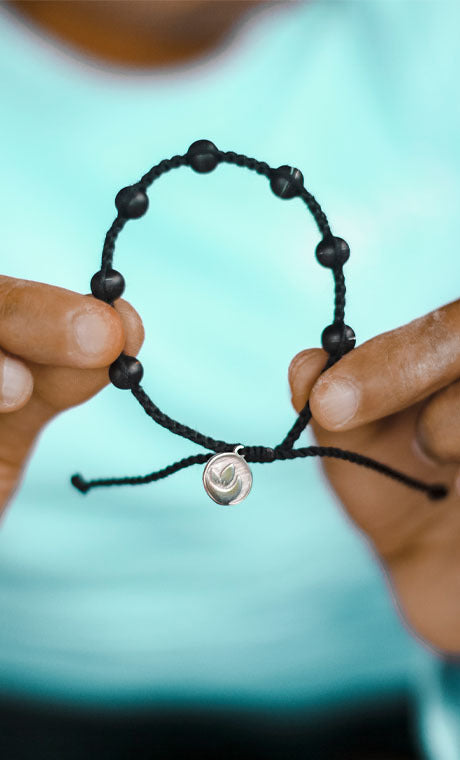
Our river barriers intercept plastic before it even reaches the sea – proactively rather than just cleaning up. We provide free trash cans for locals and recycle the collected plastic on-site with Precious Plastic machines. The material is used to create new products – such as our handcrafted Ocean Plastic bracelets and sea animal sponsorships, where each item collects 1 kg of plastic from the ocean.
5% of our revenue – which is about 20% of profits – goes directly back into cleanup efforts. No investors, no greenwashing. Everything built from the ground up, out of conviction.
5 Things You Can Do for Whales Now
1. Reduce single-use plastic: Every plastic bag less means one more chance for the oceans. Start with a reusable water bottle and a cloth bag.
2. Shop consciously: Products made from recycled ocean plastic support the circular economy. Our biodegradable phone cases are an easy first step – and collect 1 kg of plastic from the ocean at the same time.
3. Educate and share: Tell your friends why whales are so important for our climate. Knowledge is the first step towards change.
4. Support beach cleanups: Whether self-organized or with local initiatives – every collected piece of plastic counts.
5. Whale-watching instead of whale-ignoring: Sustainable whale-watching tours raise awareness for animal protection and fund research projects.
A phone case won't save the world – but...
...thousands of people taking small steps together can. That's the Oceanmata philosophy. And that's why we're out there every day – in Medewi, on the beaches, on the rivers. So that whales can once again glide through clean oceans. 🐢🌊
Want to be part of the movement? Check out our bestsellers – every product collects 1 kg of ocean plastic. Or give a sea animal sponsorship to someone you care about.
Frequently Asked Questions about Whales and Plastic
How much plastic do whales ingest?
Baleen whales like blue whales filter up to 10 million liters of water daily. Researchers estimate they can ingest up to 10 million microplastic particles per day.
Which whale species are particularly affected?
Baleen whales (blue whales, humpback whales, fin whales), which filter large volumes of water, and beaked whales, which hunt in the deep sea and encounter plastic there, are particularly at risk.
What happens to the plastic Oceanmata collects?
It is sorted, shredded, and recycled on-site in Bali using Precious Plastic machines. The material is then used to create new products like bracelets and sheets. Non-recyclable types are incinerated for energy recovery at the Klungkung facility.
Entdecke passende Oceanmata Produkte

