






They glow. They pulsate. They look like living apparitions – and they are older than the dinosaurs. Jellyfish are among the most fascinating creatures in our oceans. And at the same time, among the most misunderstood.
Yet, they are not only beautiful to look at – they play a crucial role in our marine ecosystem. A role that is currently being massively disrupted by plastic pollution.

Image credit: Photo by @sayumi
650 Million Years – and Still Here
Jellyfish (scientifically: Medusozoa) are not fish, not worms, not insects. They are a world of their own. No brain, no heart, no bones. Instead: up to 95% water, a simple nerve net, tentacles – and an efficiency in survival that we humans can hardly imagine.
Fossil finds prove that jellyfish drifted through the seas some 650 million years ago. For comparison: the first dinosaurs only appeared about 230 million years ago. Jellyfish have survived all mass extinctions. Asteroids, ice ages, sea-level fluctuations – they have endured everything.
Today, there are over 2,000 known jellyfish species – from the tiny Irukandji jellyfish (only 1 cm!) to the giant Nomura's jellyfish, which can weigh up to 200 kg. Some glow bioluminescently in the darkness of the deep sea. Others – like the so-called immortal jellyfish Turritopsis dohrnii – can biologically rejuvenate themselves and restart their life cycle. Literally.
What Jellyfish Do for Our Ecosystem
"Aren't jellyfish just pests?" Many people have this thought on holiday when they suddenly bump into a jellyfish while swimming. But this view is wrong.
Jellyfish are a critical component of the marine food web. Here's what they do:
- Food source for sea turtles: Hawksbill sea turtles feed almost exclusively on jellyfish. A turtle that cannot find jellyfish starves – directly.
- Carbon pump: When jellyfish die, their bodies sink to the seabed, sequestering carbon – a natural sink in the climate system.
- Plankton regulation: Jellyfish eat zooplankton and small fish, keeping populations in balance.
- Food for tuna and seabirds: Especially juvenile jellyfish and jellyfish larvae are an important food source for many larger marine animals.
In short: Without jellyfish, the marine ecosystem would falter.
The Plastic Problem: When a Jellyfish is Not a Jellyfish
This is where it gets serious. And this is where our team in Medewi, Bali comes in.
Plastic bags. In the water, half-dissolved, transparent, with movement – they look like jellyfish. Really. That's exactly the deadly problem.
Sea turtles regularly mistake plastic bags for jellyfish and eat them. The plastic cannot be digested, clogs the digestive tract, and leads to a painful death. Globally, hundreds of thousands of sea turtles die each year from plastic ingestion – a large proportion due to bags and films.
But not only turtles are affected. Jellyfish themselves absorb microplastics. According to WWF, about 8 million tons of plastic enter our oceans each year. This plastic fragments into ever smaller particles – microplastics – and enters the food chain. Jellyfish filter plankton from the water – and also absorb microplastics.
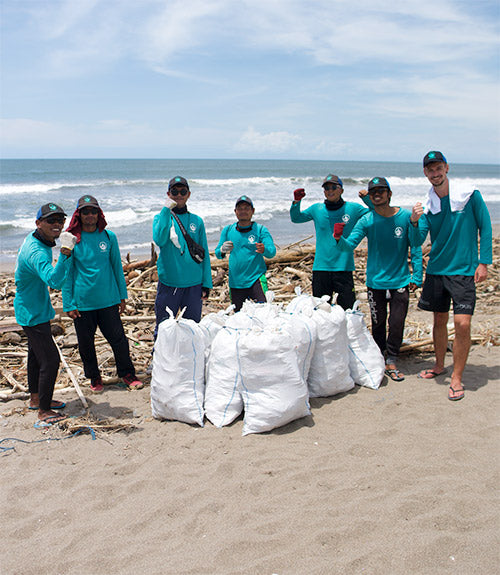
Our team in Medewi collects up to 300 kilograms of waste from the beaches of Bali every day. A large part of it: thin films and bags – exactly the material that becomes a hazard for turtles and other animals. We have collected over 320,000 kg of Ocean Plastic since Oceanmata was founded. And every day, it's getting more.
Climate Change: The Second Threat to Jellyfish
Jellyfish are incredibly adaptable – but climate change presents them with new challenges. Warmer oceans do favour some jellyfish species (there are so-called jellyfish blooms in overheated waters), but the alteration of the entire ecosystem threatens the balance.
When coral reefs die, many jellyfish species lose their habitat and food source. As ocean acidification increases (due to CO2 absorption), the food webs in which jellyfish are embedded become destabilized.
Climate change and plastic pollution are not separate problems – they reinforce each other. National Geographic reports how ocean plastic can even locally change the marine climate because it reflects sunlight and affects water temperature.
What can you do?
Dominik quit his job at Airbus after standing on the beach in Matara, Sri Lanka, and seeing: the amount of plastic is overwhelming. He picked up two, three pieces – and knew: that's not enough. A system is needed.
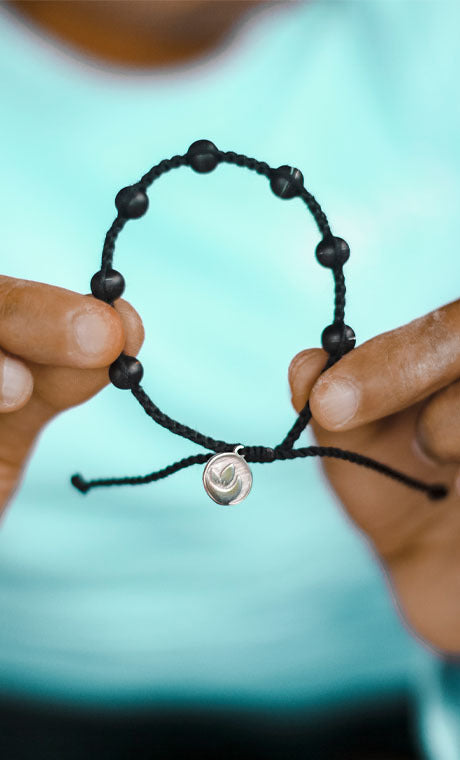
The Oceanmata system is simple: 1 product = 1 kg of ocean plastic collected. Every phone case, every bracelet, every necklace directly finances our collectors in Medewi, Bali. Locals who have a secure job. Who protect their coast. Who ensure every day that less plastic film ends up in the ocean – and fewer turtles mistake it for jellyfish.
But you can also act today:
- 🛍️ Consistently avoid plastic bags – the most direct way to protect turtles
- 🐢 Sponsor a sea turtle – for yourself or as a gift
- 🌊 Support beach cleanups – locally or through Oceanmata
- 📱 Consume sustainably – with a compostable phone case that also looks cool
"I've held the case in my hand for so many hours and each time it's nice to know that something good is associated with it. The concept is just beautiful." – Customer on oceanmata.com
Jellyfish as Indicators of Ocean Health
Marine biologists use jellyfish populations as bioindicators – meaning as a measure of the ocean's condition. When certain jellyfish species explode (jellyfish blooms), it is often a sign of over-fertilization, overfishing, or warming. When they disappear, an important link in the food chain is missing.
They are like the heartbeat of the ocean. And at the moment, this pulse is irregular.
Conclusion: Respect for the World's Oldest Marine Animals
Jellyfish are not pests. They are survival artists with 650 million years of experience. They keep our oceans in balance, feed turtles, sequester carbon, and glow in the depths of the sea with a beauty that no camera can truly capture.
What they cannot do: defend themselves against plastic and climate change. We can do that.
Join in – for the ocean, for the jellyfish, for the turtles. Every kilogram of plastic we collect in Bali is one less danger for these fascinating ancient creatures.
👉 Discover our compostable phone cases – each case = 1 kg of ocean plastic collected.
🐢 Sponsor a sea turtle – for yourself or as a meaningful gift.
💙 Ocean jewelry made from recycled ocean plastic – jellyfish, turtles & more in your look.
Frequently Asked Questions about Jellyfish
Are all jellyfish dangerous?
No. Most jellyfish species found in European seas are harmless or cause at most a mild sting. Truly dangerous species like the box jellyfish (Chironex fleckeri) are mainly found in the waters of Australia and Southeast Asia.
Why are there sometimes so many jellyfish at once?
So-called jellyfish blooms occur when conditions are particularly favorable: warm water, many nutrients (often due to over-fertilization), few natural predators. Climate change and overfishing favor these mass appearances.
Do turtles really mistake plastic for jellyfish?
Yes, this has been scientifically proven. Plastic film and bags look almost identical to drifting jellyfish in the water. For sea turtles – whose main diet is jellyfish – this is fatal.
Also check out our articles on dolphins and ocean protection and on the recycling process of our ocean plastic.
Entdecke passende Oceanmata Produkte
