



Microplastics in the Ocean – An Invisible Problem with Enormous Consequences
It's smaller than 5 millimeters, barely visible to the naked eye – and yet microplastics are now everywhere in the ocean: in the deep sea, in the Arctic ice, on the seabed, and in the bodies of fish, whales, and seabirds. Microplastics are one of the biggest threats to our oceans, and the problem is growing daily. On this page, you'll learn exactly what microplastics are, how they enter the ocean, what consequences they have – and what you can personally do about them.

What exactly are microplastics?
Microplastics refer to plastic particles that are smaller than 5 millimeters. Scientists distinguish between primary microplastics, which are intentionally manufactured at this size (e.g., microbeads in exfoliants or polyester fibers in clothing), and secondary microplastics, which are formed when larger plastic pieces break down into ever smaller fragments due to UV radiation, wind, and waves. Both forms eventually end up in the ocean.
Particularly insidious is nanoplastics – particles smaller than 1 micrometer. These can even penetrate biological membranes, directly entering the cells and organs of living beings.
How do microplastics enter the ocean?
The ways microplastics enter the oceans are diverse. The most important sources are:
- Tire abrasion: When cars drive on roads, millions of micro-rubber particles wear off. Rain washes them into the sewage system and from there into the ocean. This is one of the largest single sources of microplastics.
- Synthetic clothing: Every time you wash a fleece jacket or a polyester shirt, thousands of microplastic fibers are released – most wastewater treatment plants don't filter them out.
- Cosmetics & personal care: Many exfoliants, toothpastes, and shower gels contain tiny plastic beads (microbeads) that are flushed directly down the drain.
- Disintegrating plastic waste: Plastic bags, bottles, and packaging that end up in the environment slowly decompose into smaller and smaller microplastics due to sun and waves.
- Fishing nets & aquaculture: Plastic nets and ropes abrade and leave microparticles directly in the sea.
- Industrial pellets (nurdles): These small plastic granules are the raw material for almost all plastic products. An estimated billions are lost during transport each year.
How many microplastics are already in the ocean?
The figures are alarming. According to the UN Environment Programme (UNEP), around 8 to 10 million tons of plastic enter the ocean annually. Estimates suggest that there are now over 171 trillion plastic particles on the ocean surface – and that's only what we can measure at the surface. The majority sinks to the seabed.
In the so-called Great Pacific Garbage Patch, plastic accumulates in a region larger than France. But the idea that plastic only lies in such visible places is misleading: microplastics are literally everywhere – from the deep sea to the most remote mountain streams.
What do microplastics do to marine animals?
For marine life, microplastics are a direct threat. Fish, birds, and sea turtles mistake plastic particles for food. This has several fatal consequences:
- Plastic fills the stomach without providing nutrients – animals starve with full bellies
- Chemical pollutants that attach to plastic particles (e.g., DDT, PCBs) enter the body
- Injuries to digestive organs from sharp-edged fragments
- Nanoplastics can cross the blood-brain barrier and cause nervous system damage
Particularly affected are sea turtles, seabirds, and whales. A study by the University of Exeter found plastic fragments in the bodies of 100% of the examined sea turtles.

Microplastics in the food chain – and in us
What marine animals ingest also ends up on our plates via the food chain. Seafood, table salt, and drinking water are already measurably contaminated with microplastics. Studies have detected microplastics in human blood, lungs, liver – and even in the placenta of unborn babies.
The long-term health consequences for humans are not yet fully understood, but initial studies indicate inflammatory processes, hormonal disruptions, and possible carcinogenic effects. The problem affects all of us – directly.
Microplastics also threaten our climate – 2026 Research 🌍
New studies show: Microplastics not only harm marine animals but also sabotage one of the most important allies in the fight against climate change – the ocean itself.
Our oceans absorb about 25 to 30 percent of human CO₂ emissions. Responsible for this is the so-called biological carbon pump: plankton, algae, and bacteria bind CO₂ at the water surface and transport it to the deep sea as they sink. Without this mechanism, global warming would be significantly more advanced.
A study from January 2026 shows for the first time: Microplastics massively disrupt this cycle:
- Plankton is harmed: Microplastics attach to plankton and disrupt photosynthesis – the basis of the entire carbon pump
- Microbial communities change: Plastic particles provide surfaces for bacteria that themselves release greenhouse gases
- Plastic releases CO₂: When it decomposes due to UV radiation, methane and other greenhouse gases are produced
27 Million Tons of Invisible Nanoplastics 🔬
Researchers have solved a mystery: Where is all the plastic that should be in the ocean? The answer: It's there – just invisible. In the North Atlantic alone, an estimated 27 million tons of nanoplastic particles – smaller than one micrometer, capable of entering cells – are drifting. From plankton to whales, from the food chain to our plates.
Why are microplastics so difficult to remove?
The core problem: Plastic does not biodegrade. It only gets smaller and smaller. This means once it enters the ocean, it stays there for hundreds of years – or longer. Mechanically removing microplastics from the ocean is virtually impossible: the particles are too small, too widely dispersed, and have sunk too deep. Even the most sophisticated cleaning technologies only reach the surface and capture a fraction of the problem.
This does not mean that nothing is being done – initiatives like Oceanmata are actively working to recover plastic waste from the ocean before it breaks down into microplastics. But the most effective solution remains: letting less plastic enter the environment.
What can politics and industry do?
The good news: things are moving. In the EU, microbeads in cosmetics have been largely banned since 2020. Single-use plastics like straws, cotton swabs, and cutlery are now prohibited in many countries. The EU is working on a comprehensive plastic agreement. But implementation is slow, and many loopholes remain open.
Necessary steps at the political level:
- Consistently enforce producer responsibility
- Invest in better wastewater treatment plant technologies for microplastic filtration
- Mandatory recycling quotas for plastics
- Promote sustainable materials as alternatives to single-use plastic
What can you personally do about microplastics?
You have more influence than you think. Here are concrete measures that truly make a difference:
- 🧺 Wash synthetic clothes less frequently and use a Guppyfriend bag to catch fibers
- 🧴 Buy cosmetics without microbeads – look for "Polyethylene" or "Polypropylene" in the ingredient list
- 🛒 Buy less single-use plastic – every avoided plastic bottle is a step in the right direction
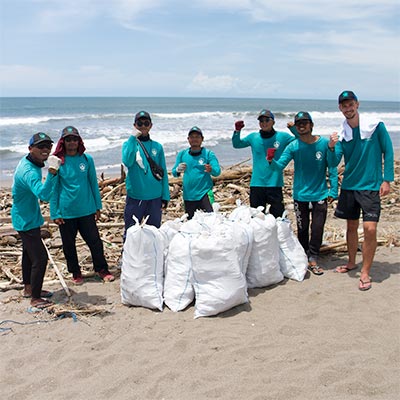
- 🚶 Keep local beaches and waters clean – even a small cleanup makes a difference
- 📱 Choose sustainable products that collect plastic from the ocean – for example, Oceanmata phone cases made from ocean plastic
- 💬 Raise awareness – tell others about it. Awareness is the first step to change
How Oceanmata actively fights marine plastic
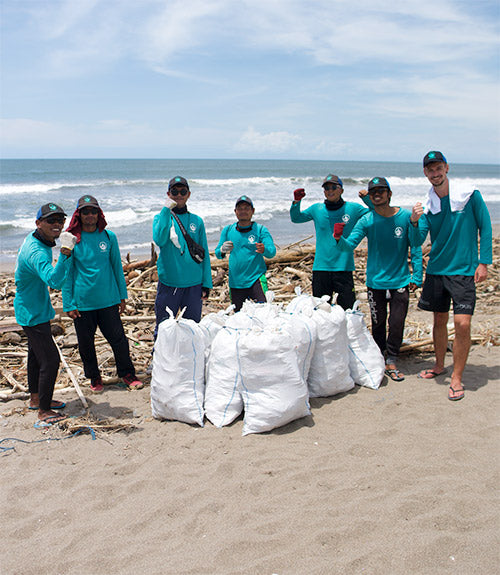
At Oceanmata, we believe that every purchase is a vote with your wallet. That's why for every product sold, we collect 1 kg of plastic from the ocean – primarily in Medewi, Bali, a region heavily affected by marine pollution. Our team regularly cleans up beaches and coastal sections there.
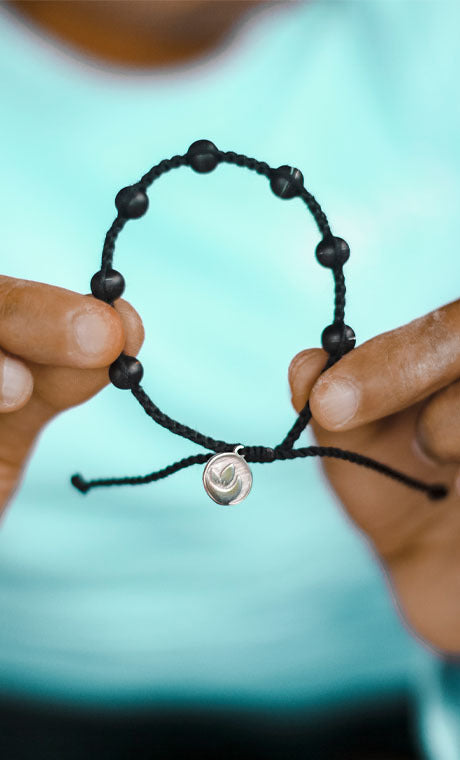
Our iPhone cases and Samsung cases, as well as our Ocean Plastic jewelry, are made directly from salvaged ocean plastic – thus closing the loop. You can also directly adopt a marine animal and thereby specifically contribute to the protection of turtles, sharks, and co.
Frequently Asked Questions about Microplastics
Can microplastics be removed from the ocean?
Unfortunately, only to a very limited extent. Recovery is possible on the surface and beaches, but most particles are too small and too widely dispersed. Prevention is therefore more important than recovery.
Are microplastics in drinking water dangerous?
Microplastics have been detected in almost all drinking water sources worldwide. The long-term health consequences are still being researched. Until more clarity exists, experts recommend avoiding plastic bottles and opting for tap or filtered water.
Which marine animals are most affected by microplastics?
Sea turtles, seabirds, whales, dolphins, and all filter-feeding animals such as mussels, oysters, and small fish are particularly at risk – and indirectly, so are we humans.
Conclusion: It's not too late
Microplastics in the ocean are a serious problem – but not an unsolvable one. Every ton of plastic that does not enter the ocean is a step in the right direction. The combination of conscious consumer choices, political pressure, and initiatives like Oceanmata can make a difference. The ocean has given us a lot. It's time to give something back.
When Dominik quit his job as an engineer at Airbus in 2020 to found Oceanmata, he knew: The fight against ocean plastic starts with small steps. What began as an idea on a trash-strewn beach in Bali is now a team of 11 employees in Medewi, collecting plastic every day.
Join us – for a plastic-free ocean 🌊
Every Oceanmata product saves 1 kg of plastic from the ocean – produced directly in Bali by our local team. Start small, make a big impact: Your next phone accessory can change the ocean.
Entdecke passende Oceanmata Produkte